By Frank G. & Edwin H.
Bolivian cedula: exchanges & brokerages that work

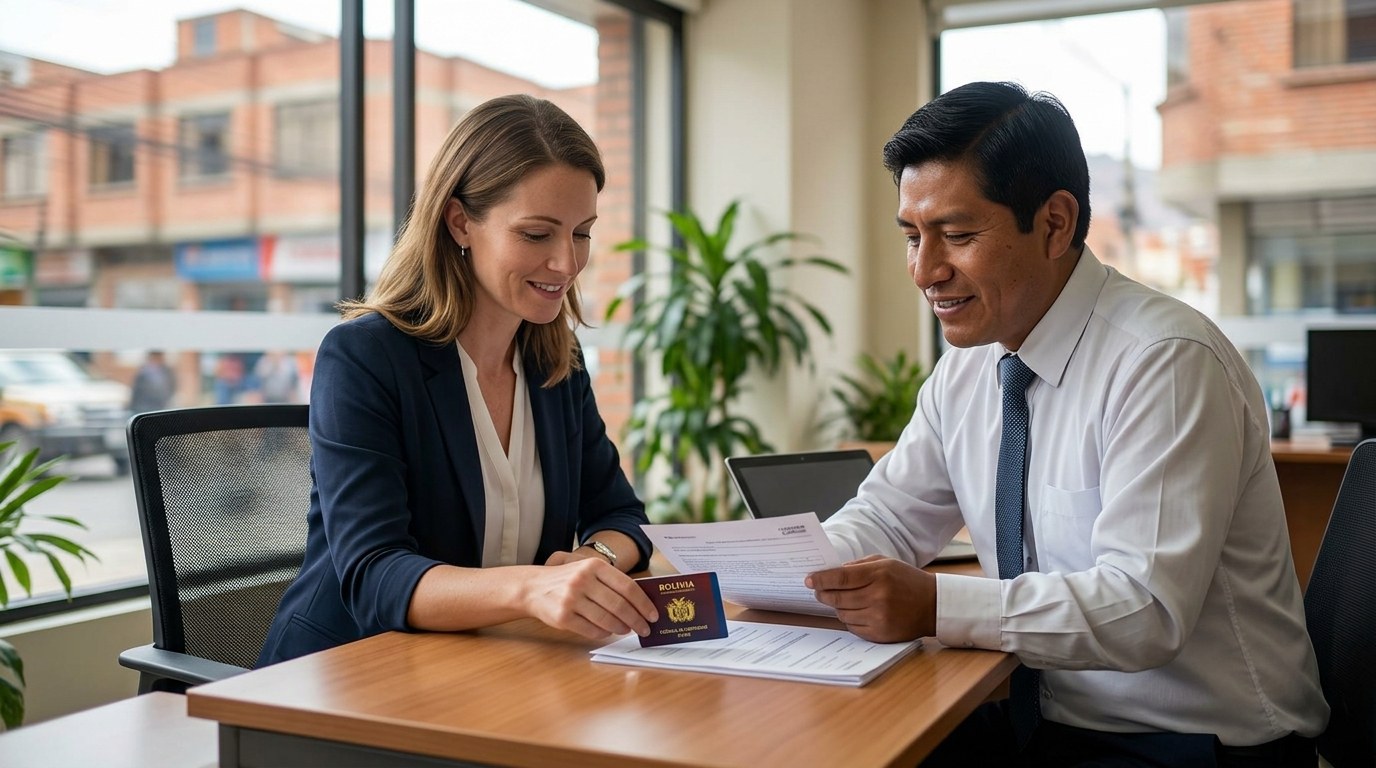
You pick up your new Bolivian Cédula de Identidad de Extranjero, then the next question arrives fast: which platforms will accept it?
That question matters because the cédula is the document that moves you from visitor status into normal financial life in Bolivia. Once you have it, you can open Bolivian bank accounts, including Banco Bisa accounts with USDT stablecoin access, and you can use crypto exchanges that are confirmed available in Bolivia, including Kraken, Bybit, and Bitget. For many new residents, that combination matters as much as the Residency Filing itself.
If you are still planning your move, read Bolivia residency in 2026: complete step‑by‑step guide and Costs and timeline of getting residency in Bolivia for the process, timing, and common paperwork points.
Below, we will keep the focus tight. We are looking at the practical question behind the headline, Which exchanges and brokerages work nicely with your brand-new Bolivian Cedula? We will stick to what is confirmed, what looks likely, and where you should expect platform-specific friction.

How global platforms use your Bolivian Cédula for KYC
Most global platforms treat your Bolivian cédula as the identity document that proves you are a legal foreign resident in Bolivia. In practice, the platform usually wants to know three things:
- Who you are
- Where you reside
- Whether your country and document type fall inside its onboarding rules
Your cédula helps with the first and second points. Bolivia issues it through SEGIP as the Cédula de Identidad de Extranjero, often shortened to CIE. That is the core resident ID for foreign nationals. Once you hold it, you can use it for banking, contracts, company representation, and day-to-day identification inside Bolivia.
That does not mean every platform will approve every account type. A crypto exchange may accept Bolivian documents for spot trading and basic custody, while a brokerage may accept Bolivia as a country of residence but still limit some products. Another platform may list Bolivia as supported, then fail during the document upload flow because its internal database does not recognize the cédula correctly. This is not unique to Bolivia, but happens with many forms of ID from many countries, it depends on the platform more than on the country of residence.
If you already have multiple residencies, have a complex tax-residency planning, or you are combining Bolivia with a Paraguay residency, you may also want to read Using Bolivian residency in a global diversification & asset‑protection strategy.
Crypto exchanges that typically work with Bolivian documents: Kraken, Bybit and Bitget
Three names stand out as the clearest options for a new Bolivian resident.
- Kraken, available, Bolivia not restricted
- Bybit, available, Bolivia included in supported Latin American markets
- Bitget, available, full KYC with Bolivian documents
Those are the strongest confirmed exchange names for residents who want a clean starting point after receiving a cédula.
Kraken is the easiest one to understand at a high level. Bolivia is not on its restricted-country list, so residents can access the platform. That makes Kraken one of the first places many people try after getting local residency sorted.
Bybit also sits in the workable category. Bolivia falls inside its supported Latin American coverage, which gives residents a credible option beyond one single exchange. That matters because account policies change, products change, and some users want a second option to diversify from day one, which is always a wise decision.
Bitget is another excellent option, it is listed as allowing full KYC with Bolivian documents.
For a new resident who wants a straightforward identity verification path, these are a few useful habits worth keeping:
- Take and keep clear photos of your cédula and passport.
- Always use a proof-of-address format that matches your platform settings
- Expect product-level limits differ even if the account opens.
A spot account, a fiat rail, a card feature, and futures access do not always get approved together, all at once. The platform may approve one and block another until more verification steps are passed or not allow for certain products in one jurisdiction, but does allow it in another.
Bolivia’s financial regulations make verifying your exchange KYC under your Bolivia documents especially advantageous. The country currently has no specific crypto capital gains tax for individuals and no wallet reporting requirements. Banks have also moved toward stablecoin services, with all Bolivian banks authorized to offer crypto custody since November 2025, which creates a more usable bridge between local residency and digital asset activity. For a more detailed understanding of why Bolivia is so friendly towards crypto, have a look at this article; Is Bolivia crypto‑friendly? Laws, reality and risks.
Binance, Meru and what partial or local access means in practice
Binance sits in a more mixed category.
What is confirmed is narrow but useful: Binance P2P works with BOB, the boliviano. Direct KYC with Bolivian documents remains uncertain, and futures are blocked. That means Binance may still help with local trading flows, but it should not be your only plan if you want a clean long-term setup under a Bolivian resident profile.
For many residents, “partial access” means one of these situations:
- You can use P2P, but not the full account suite
- You can verify some identity data, but not complete all features
- You can trade spot products, but not derivatives
- You can deposit and withdraw in certain ways, but not through every rail
That is a different experience from Kraken, Bybit, or Bitget, where the base of available products with a Bolivian ID is not limited.
Meru is a US-incorporated neobank (R3mit Solutions Inc., Florida) available in over 150 countries, including Bolivia. It provides a USD account with debit card, crypto trading via the Stellar blockchain, and MoneyGram integration. It is not a Bolivia-specific platform, but it works well for Bolivian residents who want a dollar-denominated account with crypto on- and off-ramps.
Two other major platforms worth mentioning are OKX and Coinbase.
OKX is not available in Bolivia. Bolivia is explicitly listed on OKX's restricted countries in their Risk & Compliance Disclosure, grouped with countries that have national-level crypto restrictions. This is not a gray area, it is a hard block.
Coinbase is less clear. Bolivia was added as an eligible country back in 2021, but it does not currently appear in Coinbase's region selector on the main landing page. Bolivia is not an OFAC-sanctioned country, so it is not explicitly banned either. If you want to test Coinbase with your cédula, it may work, but do not count on it as your primary platform until confirmed.
At the same time, platform capabilities can differ, and product depth can differ. If you want the cleanest setup, many new residents start with one established international exchange and keep local options as a second layer.
If you are still deciding whether Bolivia fits your broader move, Can Bolivia be your next digital‑nomad base? covers the wider lifestyle and residency angle.

Brokerages for stocks, ETFs and bonds with Bolivian residency
The brokerage side is even better covered, there are many useful options.
Here's some options that work very nicely:
- Interactive Brokers, available
- Trading 212, available
- tastytrade, available
- Swissquote, not available for new accounts from Bolivia, but existing accounts opened from supported countries continue to function normally
One important note for residents coming from Europe, Paraguay, or other jurisdictions: if you already hold accounts with platforms like Interactive Brokers, Swissquote, Kraken, or others from your previous residency, those accounts typically continue to work after you relocate. The question this article focuses on is which platforms will accept your new Bolivian documents for a fresh account opening.
This is just a tiny example of verified brokerages that do work with a Bolivian ID, so if you want a brokerage account for stocks, ETFs, and bonds, with document handling that does not break as soon as you upload a Bolivian ID, your options are very wide.
If you are a new resident, build your brokerage setup in the same order you would use for any formal relocation:
- Secure the cédula
- Secure your local banking relationship if needed
- Use one country-of-residence profile across your applications
- Open your core brokerage first, then add backups
That sequence reduces the chances that one platform records you as resident in one country while another records you somewhere else.
Bolivian banks, USDT accounts and stablecoins as payment instruments
The bank side is one of Bolivia’s strongest points for crypto-oriented residents.
Banco Bisa is the first bank with a live USDT custody service, and it remains the only one operational so far. However, since November 2025, all Bolivian banks have been authorized by the Economy Minister to offer crypto custody, savings accounts, credit cards, and loans backed by digital assets. More banks are expected to follow Bisa's lead. Once you have your cédula, you can open Bolivian bank accounts, and Banco Bisa’s USDT access gives residents a formal bridge between local banking and stablecoin use.
That matters for several reasons:
- You get a local bank relationship under your resident ID
- You can hold and use USDT through a bank that has a live service
- You are not limited to offshore-only crypto workflows
Bolivia also gives a valuable additional feature for crypto users. The country has not implemented CRS or CARF, and banks do not share account information with foreign tax authorities through CRS. If that piece matters for your relocation planning, see CRS & CARF Status in Bolivia.
ASFI licensing, the April 2026 deadline and domestic exchange prospects
Bolivia’s domestic crypto framework is still forming, and the regulator has set an important milestone. ASFI extended the deadline for domestic crypto exchange license applications to April 30, 2026, which is just weeks away at the time of writing. This deadline could reshape the domestic exchange landscape quickly.
That deadline matters because it signals that Bolivia is building a local regulated exchange environment instead of leaving the market in a permanent gray area.
Residents should read that development in a practical way:
- More domestic options may appear after licensing progresses
- Current local access may improve as regulated providers come online
- Bank-to-crypto connections may become easier to use inside Bolivia
At the same time, no one should build a near-term financial setup around future approvals. If you have your cédula now, work with what exists now:
- Kraken, Bybit, and Bitget for confirmed exchange access
- Banco Bisa for live USDT bank custody
- Trading 212 and tastytrade for confirmed brokerage availability
- Interactive Brokers as a likely option worth testing
That gives you a current operating stack while Bolivia’s domestic market develops.
Digital asset payment volumes and how fast Bolivia is moving
Bolivia’s policy direction has shifted fast. The Central Bank lifted the crypto ban for private banks in June 2024. In November 2025, the Economy Minister authorized all banks to offer crypto custody, savings accounts, credit cards, and loans backed by digital assets. Banco Bisa is operational first, and more banks are expected to follow.
The payment data shows the pace. Digital asset payments rose fivefold to about $300 million in the first half of 2025.
That does not mean every platform or product works without friction. It does mean Bolivia is moving toward normal financial use of digital assets rather than away from it.
For a new resident, the practical picture looks strong:
- The cédula opens the banking door
- Banco Bisa gives you a live USDT banking option, with more banks expected to follow
- Kraken, Bybit, and Bitget give you confirmed exchange access
- OKX is not available in Bolivia. Coinbase is unconfirmed but worth testing
- Trading 212, IBKR, and tastytrade give you confirmed brokerage options
- Swissquote works for existing accounts, not new ones
- If you already have accounts from a previous residency, they typically carry over
If you are deciding whether Bolivia fits your move, the combination of residency speed, territorial taxation, no CRS implementation, and growing crypto-banking access is what draws many people in. Timing depends on nationality group: Group 1 can often move through the active filing window in about a week once local documents are ready; Groups 2 and 3 add 15 days in country before filing. The visa is often issued the same day in La Paz and Santa Cruz; the CIE at SEGIP finishes the process, with cards printed in La Paz (often fastest pickup there). PlanBolivia.com offers a fixed, all-in residency process instead, with bundled advisory and coordination. See pricing and packages.
Want to map your next step? Read Is Bolivia Crypto-Friendly? Laws, Banks & Risks or Bolivia CRS & CARF: What Foreign Residents Risk, then get in touch when you're ready. You can also see pricing and packages.
Frequently Asked Questions
Can I use my Bolivian Cédula to open accounts on international crypto exchanges?
Yes. Kraken, Bybit, and Bitget are confirmed available for Bolivian residents, and the cédula is the key resident ID used for KYC.
Does Binance fully support Bolivian residents?
Only partial access is confirmed. Binance P2P with BOB works, direct KYC with Bolivian documents is uncertain, and futures are blocked.
Which stock brokerages are available with Bolivian residency?
Trading 212, tastytrade, and Interactive Brokers are confirmed available for Bolivian residents. Swissquote does not accept new accounts from Bolivia, but existing accounts opened from supported countries continue to function.
Can I open a Bolivian bank account and use USDT after getting my cédula?
Yes. Once you have your cédula, you can open Bolivian bank accounts, and Banco Bisa offers a live USDT custody service.
What should I do if my platform setup involves multiple residencies or a tax residency certificate?
That depends on your facts and how the platform handles country of residence and KYC. Get in touch through the PlanBolivia.com website for case-specific guidance.