By Frank G. & Edwin H.
Uyuni salt flats: costs, timing & altitude tips

Uyuni is a small, high-altitude town in southwestern Bolivia best known as the main gateway to Salar de Uyuni, the world’s largest salt flat. Most travelers pass through for one night before or after a salt flats tour, but Uyuni itself is worth understanding: it has a railway history, a compact walkable center, busy local markets, and the well-known train cemetery just outside town.
At around 3,700 meters above sea level, Uyuni feels remote, dry, and cold once the sun goes down. The town was founded in 1889 during Bolivia’s railway and mining expansion, when rail lines helped move minerals such as silver, tin, and gold toward Pacific ports. When mining slowed and steam locomotives became obsolete, much of that infrastructure was abandoned. Today, tourism drives the local economy, and Uyuni functions primarily as the jumping-off point for trips across the salt flats and the wider altiplano.
For most visitors, the key to a good Uyuni stop is simple planning: arrive with enough time to acclimatize, stay near the bus or train station and your tour office, carry cash, and be realistic about weather conditions if you want the famous mirror effect on the salt flats.

What to see and do
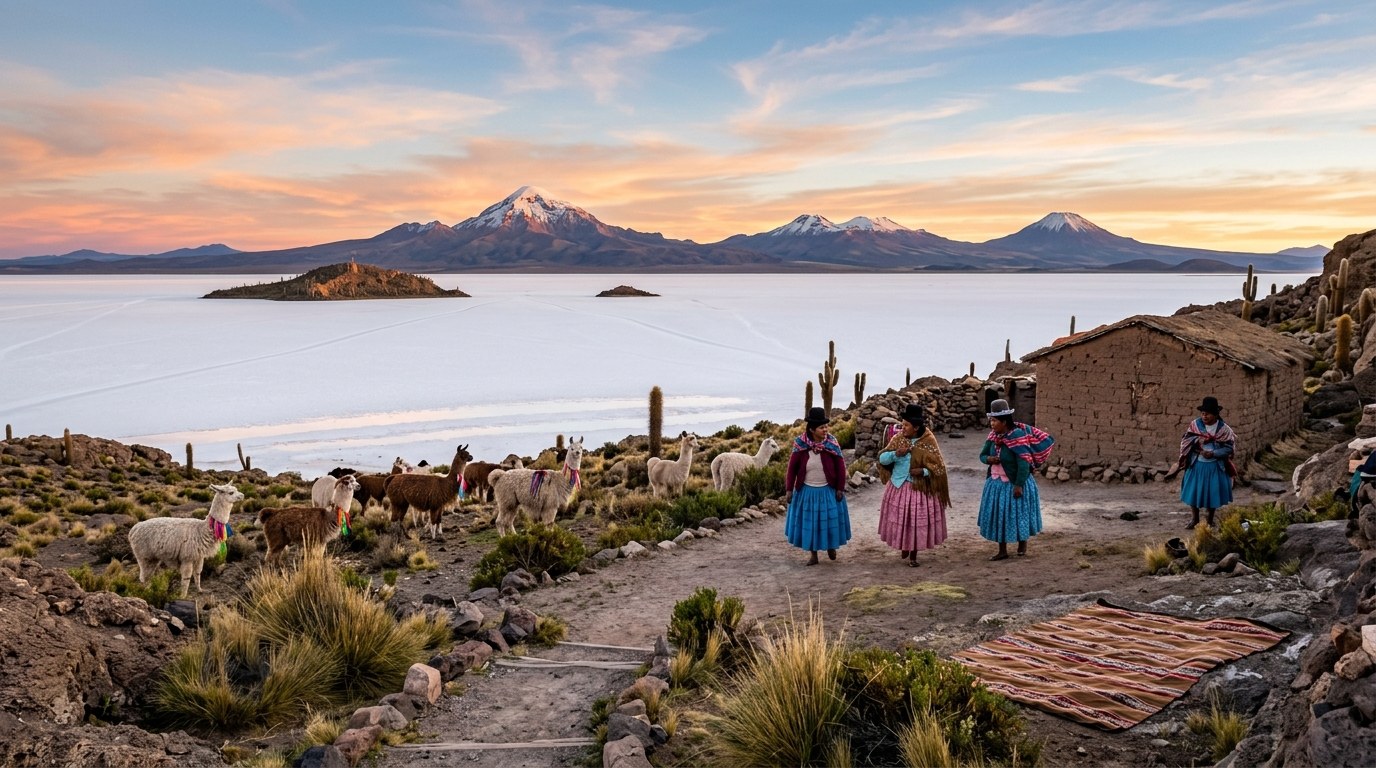
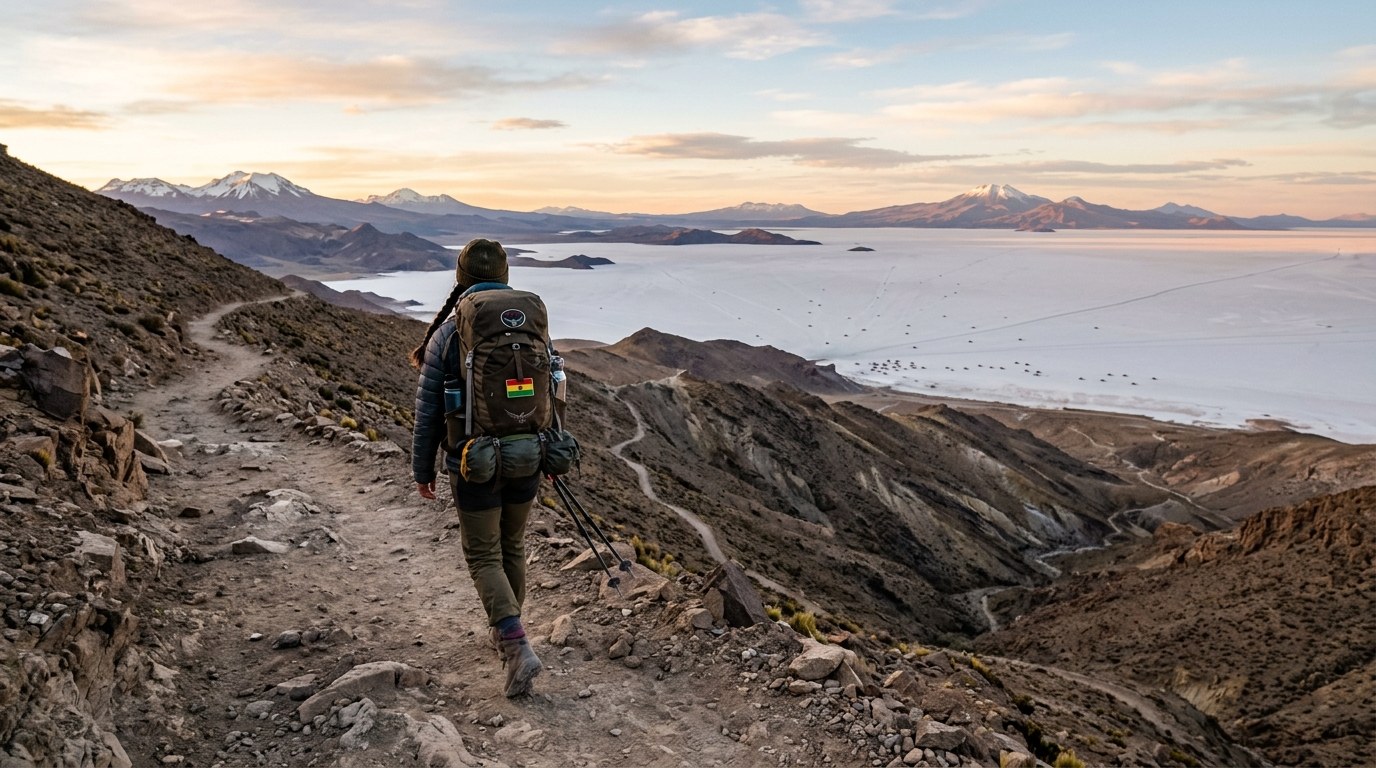
The main reason to visit Uyuni is Salar de Uyuni. The salt flat covers roughly 10,582 square kilometers and is one of Bolivia’s most distinctive landscapes. Formed by ancient lakes that evaporated long ago, it is now a huge white expanse of salt crust stretching to the horizon. It is also one of the flattest places on Earth, which is one reason it is used for satellite calibration.
Most people visit on an organized tour from Uyuni. Day trips are available, but many travelers choose a 2- to 4-day 4x4 tour to see more of the region. These longer tours usually include not only the salt flats themselves, but also several classic altiplano stops such as lagoons, volcano views, thermal springs, desert landscapes, and wildlife areas. Some tours return to Uyuni, while others finish across the border in San Pedro de Atacama, Chile.
What you see on the flats depends partly on the season. In the dry season, visitors can walk across the hexagonal salt patterns, visit Incahuasi Island when conditions allow, and take the perspective photos the flats are famous for. In the rainy season, a thin layer of water can create the mirror effect, where the sky reflects across the surface. It is visually striking, but it also comes with trade-offs: if rains are too light, there may be little mirror effect; if they are too heavy, access to parts of the flats can be restricted.
Typical tour costs are around $50 to $120 USD per person for a 1-day tour and around $200 to $350 USD per person for a 3-day tour. Prices vary depending on the operator, what is included, the quality of accommodation and meals, and whether the tour is shared or private. Private tours are significantly more expensive. On multi-day tours, accommodation is generally simple and functional rather than luxurious.
If you have a few hours in town before your tour, the best short outing is the Cementerio de Trenes, or train cemetery. It sits just outside Uyuni and is often the first stop on salt flat tours, but it is easy to visit independently. You can take a taxi in about 10 minutes or walk there in roughly 30 minutes each way. The site contains abandoned locomotives and rail cars from Uyuni’s railway era, left to rust in the dry, salty air. It is open-air, informal, and photogenic, with many visitors climbing on the old trains. Entrance is free, and the site is generally accessible at any time, though daylight is best for safety and orientation.
Best time to visit
Uyuni can be visited year-round, but the best time depends on what kind of trip you want.
Dry season, usually from May to November, is the best period for reliable access across the region. Roads and tracks are easier to navigate, tours can usually cover more ground, and places like Incahuasi Island are more consistently accessible. June to August are especially dry, with very clear skies that are excellent for night photography and stargazing. The trade-off is cold weather, especially overnight, when temperatures often fall below freezing. Daytime highs are commonly around 12 to 15°C in the colder months.
Rainy season, typically from December to April, offers the best chance of seeing the famous mirror effect. January to March are the peak months for this, but conditions are never guaranteed. Heavy rainfall can limit where vehicles can go, sometimes resulting in shorter or altered tours. Daytime temperatures are often milder, generally around 18 to 20°C at their warmest points, but cloud cover and route disruptions are more likely.
Shoulder months such as April to June and September to November are often a practical compromise. You may find somewhat lower prices, fewer visitors, and generally manageable weather. If your priority is seeing more of the wider landscape rather than specifically the mirror effect, shoulder season can be a good fit.
No matter when you go, remember that Uyuni is at high altitude. Even when the sun feels strong during the day, mornings and nights can be very cold. Pack layers, sun protection, lip balm, and plenty of water.
Costs and budgeting
Uyuni itself is not usually where travelers spend much of their budget, but costs can rise during the busiest periods for salt flats tours. Accommodation in town can feel relatively expensive for what you get, especially in peak dry season and peak mirror-effect months. Since most people only need one night before a tour and possibly one night after, the practical approach is to choose convenience over amenities.
As a rough guide, budget for the following:
-
1-day Salar de Uyuni tour: around $50 to $120 USD per person
-
3-day Salar de Uyuni tour: around $200 to $350 USD per person
-
Train cemetery: free entry
-
Simple local meal: inexpensive by international standards
-
Taxi within town or to the train cemetery: generally affordable, but availability can be limited
The source prices for two casual dining options were roughly $2.50 per person for a simple anticucho meal with a drink and around $8 for a small pizza with a drink, which gives a useful sense of range for low-cost dining. Exchange rates change, so treat these as reference points rather than fixed current prices.
Cash is important in Uyuni. Bring enough Bolivianos for meals, small transport costs, tour balances if needed, and incidental purchases. Not every smaller business accepts cards, and ATM availability can be limited or unreliable.

How to get there and get around
Despite its remote location, Uyuni is relatively straightforward to reach.
By bus: This is the most common option. Uyuni’s bus terminal is close to the town center and within walking distance of many hotels and tour offices. Typical travel times are about 3 to 4 hours from Potosí, 7 to 8 hours from Sucre, around 10 hours from La Paz, and much longer from Santa Cruz. Overnight buses are common on the longer routes.
By plane: Uyuni has a small airport with domestic flights from La Paz. Flight time is about 1 hour. This is the fastest option, though usually more expensive than traveling by bus.
By train: The train is often considered the scenic option, but it requires a bit more planning. Services connect Uyuni with places such as Oruro, Villazón, and Tupiza rather than directly with every major city. If rail travel appeals to you, check schedules carefully in advance.
Once in town, Uyuni is easy to navigate on foot. It is compact, arranged on a simple grid, and most places of interest in town are within a 20- to 30-minute walk. Avenue Ferroviaria is one of the main reference points and the area where many tour agencies are based. Taxis exist, but they are not always easy to hail on the street. In practice, it is often easiest to ask your hotel or tour company to call one. Ride-hailing apps such as Uber do not operate here.
Where to stay
For most visitors, the best place to stay in Uyuni is near the bus station, train station, and Avenue Ferroviaria. This keeps you close to where you are likely to arrive and close to many tour company offices. That matters because not all operators include hotel pickup, and some charge extra for it.
When choosing accommodation, prioritize:
-
Walking distance to the bus or train station
-
Walking distance to your tour operator’s office
-
Reliable hot water, especially in colder months
-
Heating or at least plenty of blankets
-
Breakfast if you have an early departure
-
Wi-Fi if you need to confirm onward travel plans
Because many people arrive late or leave early, convenience is usually more important than charm. Uyuni has budget hostels, simple hotels, and some mid-range options, but overall standards can be basic compared with larger Bolivian cities. If you are doing a multi-day tour that ends in Chile, you may only need one night in Uyuni before departing.
Where to eat
Uyuni is small, but there are enough restaurants and casual eateries for a short stay. You will find local food, grilled meats, pizza, cafés, and basic tourist-friendly menus.
One practical local option mentioned in the source material is Hot Grill, a family-run place serving grilled meat skewers, or anticuchos, with sides such as rice, potatoes, or salad. The cited opening times were Monday to Saturday from 6pm to 10pm, with a low-cost meal around $3.40 per person including a drink.
Another known option is Minuteman Pizza, located at Hotel Tonito. It is known for stone-fired pizzas and is a common recommendation among travelers. The cited opening times were Tuesday to Saturday from 7pm to 10pm, with prices around $11 for a small pizza and drink, or $22 for a larger meal for two.
As with all local listings in smaller towns, check current hours when you arrive. Opening times can change by season, staffing, or local demand.
Safety, altitude, and practical tips
Uyuni is generally manageable for travelers, but the environment is more challenging than the town itself. The biggest issues tend to be altitude, cold, sun exposure, and logistics rather than urban safety.
-
Altitude: At 3,700 meters, altitude can affect even experienced travelers. If possible, avoid arriving exhausted from a long overnight journey and immediately starting a demanding tour. Drink water, avoid overexertion on your first day, and pay attention to symptoms of altitude sickness.
-
Cold weather: Nights are cold year-round and can be freezing in the dry season. Bring thermal layers, a warm jacket, gloves, and a hat.
-
Sun exposure: The combination of altitude and the reflective salt surface makes the sun intense. Sunglasses, sunscreen, and a hat are essential.
-
Cash and connectivity: Do not rely entirely on cards or mobile signal. Carry enough cash and download anything important in advance.
-
Tour quality: Since your Uyuni experience depends heavily on your salt flats tour, compare what is included before booking. Ask about vehicle condition, guide language, meals, accommodation, sleeping bags, and border logistics if ending in Chile.
-
Taxi expectations: Taxis are available, but not in the same density as larger cities. Arrange one in advance if you have early departures.
-
Personal security: As in any transit town, keep valuables secure at stations and avoid flashing cash or electronics.
Local insights and onward travel

Uyuni works best when treated as a functional base rather than a destination that needs several days. Most travelers find that one night before a tour is enough, especially if they have already booked transport and accommodation. If your tour returns to Uyuni, a second night can make sense before taking a bus or flight onward.
The most common onward routes are:
-
San Pedro de Atacama, Chile: often reached as the end point of a 3-day tour
-
Potosí: around 3 to 4 hours by bus
-
Sucre: around 7 to 8 hours by bus
-
La Paz: around 10 to 12 hours by bus or about 1 hour by plane
For people considering a longer stay in Bolivia, Uyuni is less a place to settle and more a place to understand Bolivia’s geography, infrastructure, and regional contrasts. It shows how quickly conditions can change between major cities and remote high-altitude regions. If you are exploring Bolivia with relocation or residency in mind, visiting Uyuni can help you better understand travel logistics, altitude realities, and the practical differences between tourist hubs and cities where day-to-day living is easier.
Want to map your next step? Read Bolivia Travel: 9 First-Timer Mistakes to Avoid or Tupiza Travel: Costs, Safety & Salt Flats Routes, then get in touch when you're ready. You can also see pricing and packages.
Explore More Bolivia Travel Guides


Frequently Asked Questions
When is the best time to visit Uyuni?
Uyuni can be visited year-round, but the best time depends on what you want to see in Salar de Uyuni. The dry season, roughly from May to November, usually offers clearer roads, easier tour logistics, and the classic endless white salt landscape. The rainy season, typically from December to March, can create the famous mirror effect on the salt flats, though some routes may be limited by water and weather. Nights are cold in every season because Uyuni sits at high altitude, so warm layers are essential any time of year.
How expensive is Uyuni for travelers?
Uyuni is generally affordable by international travel standards, but costs rise if you join multi-day Salar de Uyuni tours. Budget travelers can find simple lodging, basic meals, and shared transport at reasonable prices, while private rooms, better hotels, and private tours cost more. Many visitors spend most of their Uyuni budget on a 1-day or 3-day salt flats tour rather than in town itself. It is wise to carry some cash, as card acceptance can be limited and ATMs may not always be reliable.
Is Uyuni safe for tourists?
Uyuni is usually considered a manageable destination for travelers, especially in the central area where most hotels, tour offices, and restaurants are located. As in any transit town, watch your bags in bus stations, avoid poorly lit areas late at night, and keep valuables secure. Choose established tour operators for Salar de Uyuni trips, confirm what is included before paying, and check vehicle condition when possible. Weather and altitude are often bigger concerns than crime, so prepare for cold temperatures, strong sun, and long travel distances.
How do you get around Uyuni and reach nearby attractions?
Uyuni itself is compact and easy to explore on foot, especially around the main streets, plaza, markets, and restaurants. Taxis are available for short trips within town and for places slightly outside the center, including the train cemetery. Most visitors reach Salar de Uyuni through organized tours, since the salt flats and surrounding desert routes require a 4x4 vehicle and local route knowledge. For arrivals and departures, Uyuni is connected by bus, train, and flights from some Bolivian cities.
What should I bring for a trip to Uyuni and the salt flats?
Bring clothing for intense sun during the day and freezing temperatures at night. Useful items include a warm jacket, thermal layers, hat, gloves, sunglasses, sunscreen, lip balm, comfortable walking shoes, and a reusable water bottle. The air is very dry and the sun is strong at high altitude, so skin and eye protection matter even on cool days. If you are taking a salt flats tour, a power bank, snacks, tissues, and some cash are also helpful, since services can be limited once you leave town.
What health tips should travelers know before visiting Uyuni?
Uyuni sits at about 3,700 meters above sea level, so altitude can affect even healthy travelers. If possible, ascend gradually, drink plenty of water, avoid heavy alcohol intake on arrival, and take it easy during your first day. Common symptoms of altitude discomfort include headache, fatigue, shortness of breath, and nausea. The climate is also cold and very dry, especially at night, so staying warm and hydrated is important. Travelers with heart, lung, or severe altitude-related concerns should seek medical advice before the trip.
Are there any local customs or practical etiquette tips in Uyuni?
Uyuni is a practical working town as well as a tourist gateway, so respectful behavior goes a long way. Greet people politely, be patient with slower service, and ask permission before photographing local residents or market vendors. In shops, small restaurants, and transport services, carrying small bills is useful because change is not always available. Tour schedules can be influenced by weather and road conditions, so flexibility is important. Respect the landscape as well by not leaving trash behind, especially on the salt flats and around the train cemetery.