By Frank G. & Edwin H.
Bolivia residency requirements: 2026 checklist

Bolivia operates one of the simplest immigration systems in Latin America. Unlike most countries in the region, Bolivia does not require apostilled birth certificates, home-country criminal records, or extensive documentation for initial residency. Many Group 1 applicants finish active steps in about a week once local documents are ready; Groups 2 and 3 add a 15-day wait before filing, and the CIE at SEGIP depends on whether you complete it in La Paz or Santa Cruz.

What You Need to Bring
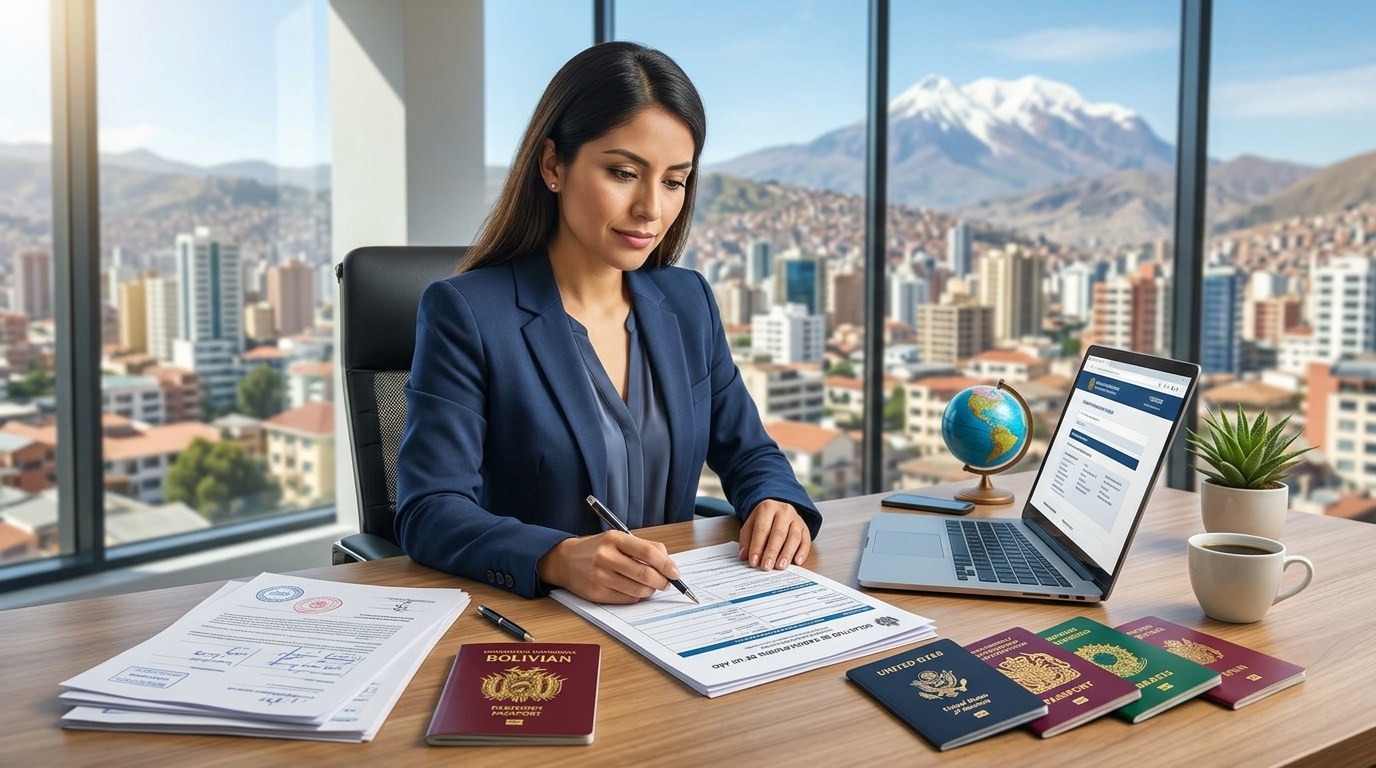
Only two things. That's it. Everything else, including medical certificates, Interpol records, sworn statements, and address proof is handled with our team on the ground in Bolivia.
What to Bring
-
Passport, valid for at least 6 months
-
Bank statements, showing $5,000+ or monthly income above ~$400
We Handle Everything Else
- Medical certificate
- Interpol records
- Sworn statement
- Address verification
- Immigration appointments
- CIE collection
Bank Statement Requirements
The $5,000 minimum is calculated as 12 months × ~$400 (Bolivia's minimum salary). You can show either:
- A lump sum of $5,000+ in your account at time of application, or
- Monthly income above ~$400
If you have variable income from investments or remote work, the lump sum approach is easier. We can advise on the best strategy for your situation.
How Long Does the Process Take?
End-to-end timing depends on your passport group and how fast you complete local checks. Most Western applicants (Group 1) can file at DIGEMIG as soon as medical, Interpol, address, and bank paperwork are ready. Some nationalities (Groups 2 and 3) must spend 15 full days in Bolivia before filing from day 16 onward. The visa is often issued the same day in La Paz and Santa Cruz. Your Cédula de Identidad de Extranjero (CIE) at SEGIP finishes the process, cards print in La Paz, so pickup is often same-day there; Santa Cruz typically adds roughly two to three weeks for the physical card after your appointment.
The 15-day rule (who it applies to)
Only Groups 2 and 3 must wait 15 full days in Bolivia before initiating the residency conversion. Group 1 does not have that mandatory tourist wait, still plan time on the ground for housing, banks, medical, and Interpol with your lawyer.

How Much Does It Cost?
Our service handles everything for you, from start to finish, including lawyer fees and government costs. Choose the package that fits your needs:
Our service packages
Full-service residency support from $1,999 per person. Lawyer fees and government costs included.
Family discounts are available. Every package is available in La Paz or Santa Cruz.
Standard
$1,999/person1-year residency. Available in La Paz or Santa Cruz. End-to-end handling.
Multi-year
$2,499/personMulti-year residency (up to 3 years). Available in La Paz or Santa Cruz. Skip the early renewals.
Add-ons
+$499 VIP · +$50/mo MastermindVIP Fast-Track for priority processing. Mastermind community for ongoing access and support.
All packages include lawyer coordination and government fee estimates. See full pricing details.
What Do You Actually Get?
The Cédula de Identidad de Extranjero (CIE), Bolivia's foreign resident ID card, issued by SEGIP, gives you:
- Open Bolivian bank accounts
- Access crypto exchanges (Meru, Binance used locally)
- Serve as legal representative of a company
- Obtain a Bolivian driver's license (requires driving test)
- Operate legally in Bolivia for banking, contracts, and daily life
The Address Requirement: La Paz vs Santa Cruz
In La Paz, an Airbnb works for the typical initial filing. Ask the host for a photo of the front door, their full name, DNI number, and phone number. You can change your address later in the immigration system. No formal long-term lease is required for that path.
In Santa Cruz, requirements are slightly heavier but still manageable: a written agreement (notarized or simple) identifying the property owner, plus a recent electricity bill and a copy of the owner's ID card. A full formal lease is no longer required, and Airbnb stays work as long as the host can provide that documentation. The main reason many applicants still process in La Paz is speed at SEGIP (the cédula step), not the address paperwork.
Can You Skip the 1-Year Visa?
Yes. If you have a services contract from a Bolivian company (which you can get by forming your own SRL), you can go straight to a 3-year temporary residency visa. This skips the year-1 renewal entirely. An SRL costs approximately $20 minimum capital and takes 1–2 weeks to form.
What Happens If You Overstayed Before?
If you paid the fine at the time, the immediate record is cleared. However, an overstay zeroes out the rest of your tourist day allowance for the year, so you cannot simply return as a tourist and apply. You will need to enter under a different visa category (such as a specific purpose visa) tied to your intended activity in Bolivia. This is a hard constraint, talk to us first if you have an overstay in your history so we can plan the right entry route.
Important: Absence Rules During Residency
You get 90 days outside Bolivia per calendar year by default. Up to another 90 days can be added if you apply for an extension (prórroga) before the first 90 expire and it is approved, for a maximum of 180 days outside per year. Plan your year accordingly, you need approximately 185 days of physical presence in Bolivia.
Ready to Get Started?
Pack your passport. Bring your bank statements. Everything else is handled for you. Our team meets you in Bolivia, coordinates all appointments, and walks you through each step. No document hunting, no government queues, no confusion.
Want to map your next step? Read Bolivia Residency in 2026: 7 Steps to Your CIE or Bolivia Residency Documents: Nationality Checklist, then get in touch when you're ready. You can also see pricing and packages.